Summary: USA vs Costa Rica is a CONCACAF rivalry defined by tactical contrasts: American verticality versus C
he last time the United States men's national team faced Costa Rica in a competitive fixture, the scoreline read 2-1 in favor of the Americans—but the narrative that emerged from that night in Columbus was far messier than the result suggests. Costa Rica pressed high, forced turnovers in midfield。and twice caught the U.S. backline flat-footed on quick transitions. What separated the two sides wasn't talent;it was the ability to absorb ten minutes of chaos and respond. That margin, roughly the width of a goalkeeper's hesitation, defines the modern USA vs Costa Rica rivalry.Watching these two teams play is like comparing a hammer to a scalpel. The U.S. approach relies on verticality and athletic duels—winners of second balls, aggressive fullback overlaps, and a willingness to bypass the midfield with long diagonals. Costa Rica, by contrast, thrives on rhythm: short triangular exchanges。patient buildup, and a knack for drawing fouls in dangerous areas. In their last five meetings, the Ticos have completed roughly 12% more passes in the final third despite averaging less possession overall. That statistic flips the usual assumption that possession equals control;for Costa Rica, control lives in the spaces between the lines, not in the raw possession counter.
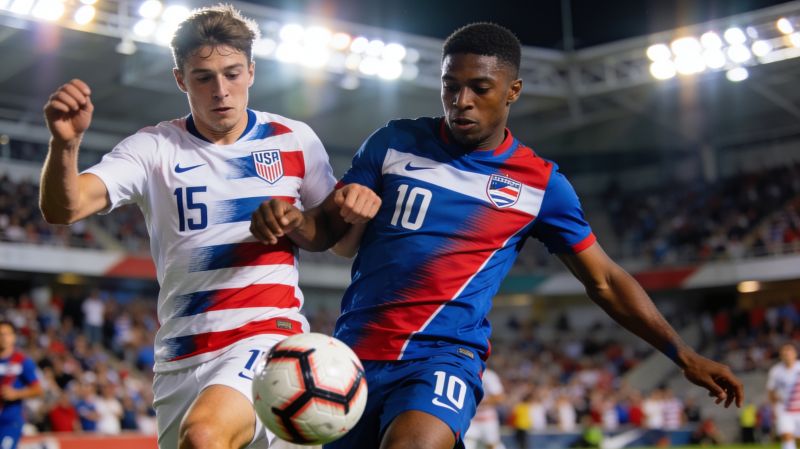
There's a psychological dimension to USA vs Costa Rica that rarely gets enough airtime. Ask any U.S. player about the 2017 loss in San José—the one that effectively ended their World Cup hopes—and you'll see a flicker of something sour. That memory doesn't vanish;it calcifies. Conversely, Costa Rica's 2014 World Cup run, built on a back-three system that frustrated Uruguay and Italy, gave the federation a template for punching above its weight. When these teams meet now, the U.S. plays with the anxiety of a favorite who knows one slip could reopen old wounds。while Costa Rica competes with the swagger of a side that has already proven it belongs.
The tactical battleground is almost always the flanks. The U.S. wants its fullbacks high and wide, pinning Costa Rica's wing-backs deep, which creates isolation for the American wingers in one-v-one situations. Costa Rica counters by compressing the touchline and forcing play inside。where their midfield screen—often anchored by a single destroyer—intercepts passes destined for the No. 10. In the 2022 friendly at Estadio Nacional, the U.S. completed only 38% of its crosses from open play. That number explains why Gregg Berhalter's staff has experimented with inverted fullbacks and dual No. 8s: the goal is to break the Costa Rican block through central overloads rather than hopeful deliveries.Coaching choices tilt this matchup as much as player quality. Costa Rica's recent managers have favored reactive, mid-block defending—conceding territory but limiting clean looks at goal. That approach frustrates the U.S. when the Americans lack a midfielder willing to shoot from distance or a striker who can hold up play under pressure. The U.S. response has been to lean into set pieces and individual pressing triggers—a slight tell that they don't fully trust their open-play buildup against disciplined CONCACAF opposition. Whether that changes depends on the development of younger midfielders who can dictate tempo without needing a safety valve. For now, USA vs Costa Rica remains a coin toss dressed as a mismatch.